|
|
|
|
Community Global Villages
|
|
||||||||||||||||||||||||||||||||||
 |
|
|
||||||||||||||||||||||||||||||||
|
Are Asian
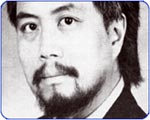
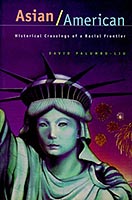
people in the U.S. called David Palumbo-Liu, an Associate Professor in Comparative Literature at Stanford University explores these questions and much more in his landmark 504 page book Asian/American: Historical Crossings of a Racial Frontier. Palumbo-Liu examines the development of modern "Asian/America" from a broad range of sources from history, popular culture, media, migration, ethnicity, comparative literature to political science. AC Team's Mike Kai asks Professor Palumbo-Liu about his book and shares personal thoughts on being Asian/American:
Palumbo-Liu: That Asian American history cannot be understood without understanding both Asian and American history, and that certainly American history cannot be understood without recognizing how modern America was importantly shaped by it's involvement in Asia. AC Team: What influenced you to pursue your current field of study? Palumbo-Liu: I was asked by Professor Ling-Chi Wang at UC Berkeley to TA a course in Asian American Studies in 1978. That introduced me to Asian American studies and gave me the chance to participate in thinking through this new field. Having grown up in a white suburb of California, I was interested in what "Asian American" was. AC Team: Many Asian images in mainstream American media continue to be stereotypical. Right now there is a disparity between how Asians are presented in the mass media and our real selves. What can we do to help bridge this image gap? Palumbo-Liu: We can pressure the media, but they are only interested in entertainment dollars. It would be more productive to, at the same time, educate our friends and acquaintances of the issues. AC Team: Do you feel we are entering the "Pacific Century" in which Asians and Asian Americans will have a more influential role in American society? Palumbo-Liu: Yes, definitely. But this requires our active participation in a broad range of issues, many of which may not appear to be "Asian American." AC Team: As a 5th generation Asian American, I sometimes feel torn between being Asian and American, since I am both. Some of my friends [born in Asia] have very strong foreign Asian identities native to their parent's homeland. Some of these friends look at me differently because I have much stronger American roots than they do. Have you ever felt this disparity in your Asian identity? Palumbo-Liu: I am more like you - as I said; I grew up in a very western-educated family, and in a white suburb. I forced myself to study Chinese only in the University, when it became important for me to learn more about the culture. But I try to avoid feeling apologetic for not being what I am not. AC Team: Thanks so much for your comments and congratulations on your book. Palumbo-Liu: Thanks for your interest. - AC Team's Michael Kai -------------------- He is the author of The Poetics of Appropriation: The Literary Theory and Practice of Huang Tingjian, 1045-1105, (Stanford University Press, 1993); author and editor of the anthology The Ethnic Canon: History, Institutions, Interventions (Minnesota, 1995); author and co-editor with Hans Ulrich Gumbrecht, Streams of Cultural Capital: Transnational Cultural Studies (Stanford University Press, 1997); Asian/American: Historical Crossings of a Racial Frontier, (Stanford University Press, 1999). Palumbo-Liu's current research includes studies of border art, race and media, culture and politics, social philosophy, and the aesthetics and ethics of globalization.
|
||||||||||||||||||||||||||||||||||
|
|
||||||||||||||||||||||||||||||||||